Our team began creating web publishing tools in 1998, when we launched a SaaS CMS for newspapers in France.
Then, in 2002, we launched a DIY ad network for blogs, the first social media advertising platform.
In 2010, we created a tool to help people on Twitter, who we thought of as micro-publishers, better understand their own networks.
Last year, we created Quizlab to help Substack creators better engage readers, boost loyalty and reduce churn.
Now we’ve created Skyangles, which offers Bluesky users many of the insights we developed for Twitter 15 years ago.
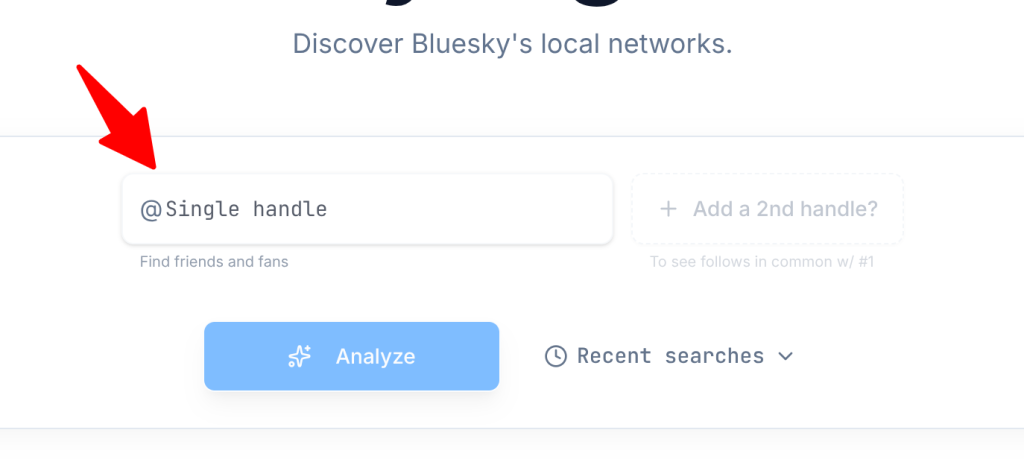
If you’re on Bluesky, you can use Skyangles to quickly distill a list of your biggest followers, both those you’ve followed and those you have not (yet) followed back. Just load in a Bsky handle and Skyangles does the rest.
Too busy to examine each and every new follower, many accounts have no clue how influential some of their followers are. For example, does former Twitter honcho Jason Shellen, with ~1,500 followers, realize he’s followed by Atlantic photo editor Alan Taylor, who has 22k followers? This fact is unearthed by Skyangle’s list of Shellen’s “fans,” ie followers that an accounts hasn’t followed back.
Skyangles also can be used to identify who two accounts both follow, which is a great way to locate hidden influencers for a given domain, locale or workplace. Load in two handles and click “analyze.” For example, here’s a list of 31 Atlantic Magazine staff, accounts followed in common by writers Tom Nichols and Elaine Godfrey.
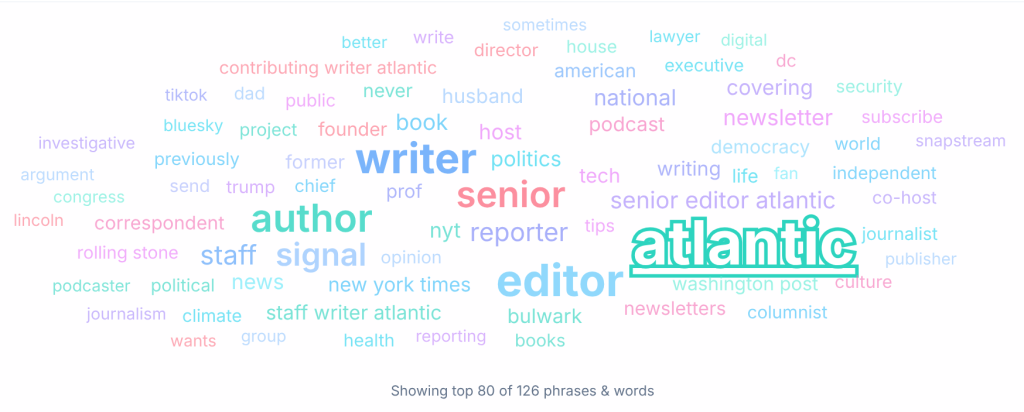
One final fun feature in both search modes: a word cloud based on the bios of discovered accounts. Below is the cloud for the accounts followed by both Nichols and Godfrey.
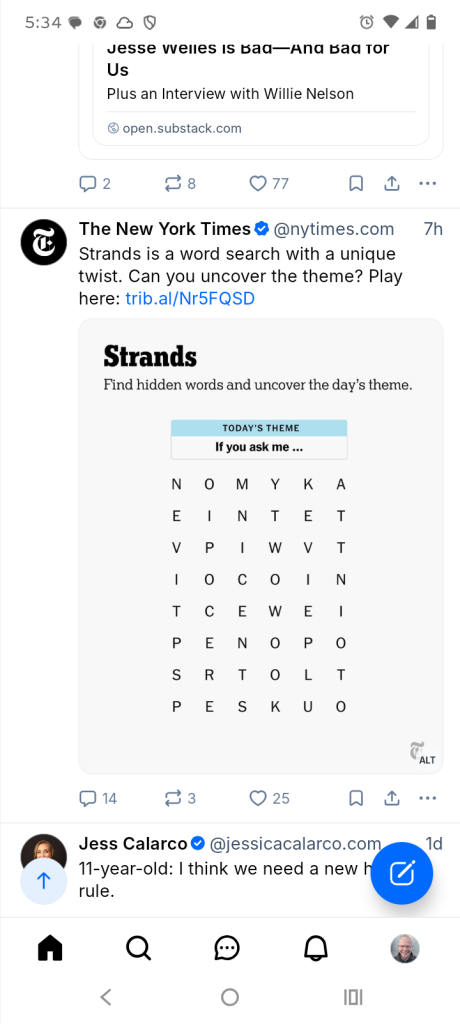
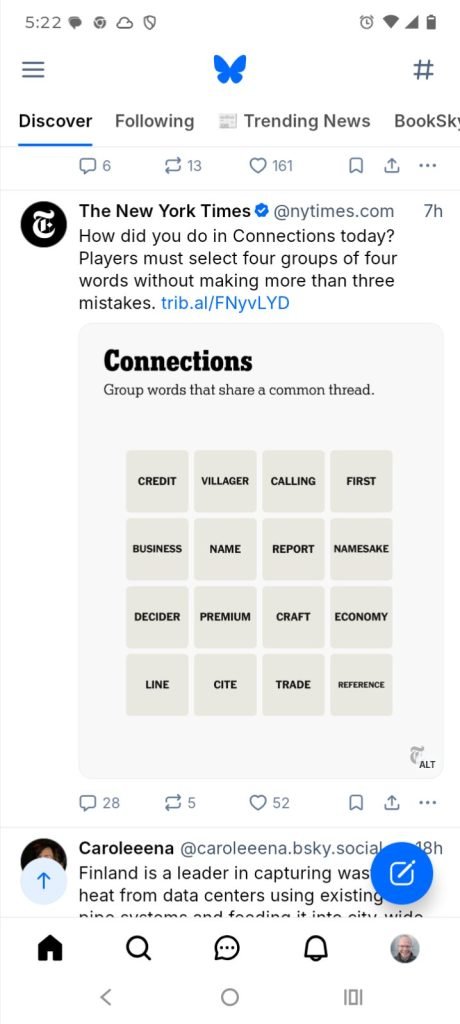
The rigorous firewall that used to separate NYTimes editorial content from the company’s game content seems to have fallen, at least if the Times’ Bluesky account is a valid litmus text.
Here’s the Times account promoting Strands and Connections.
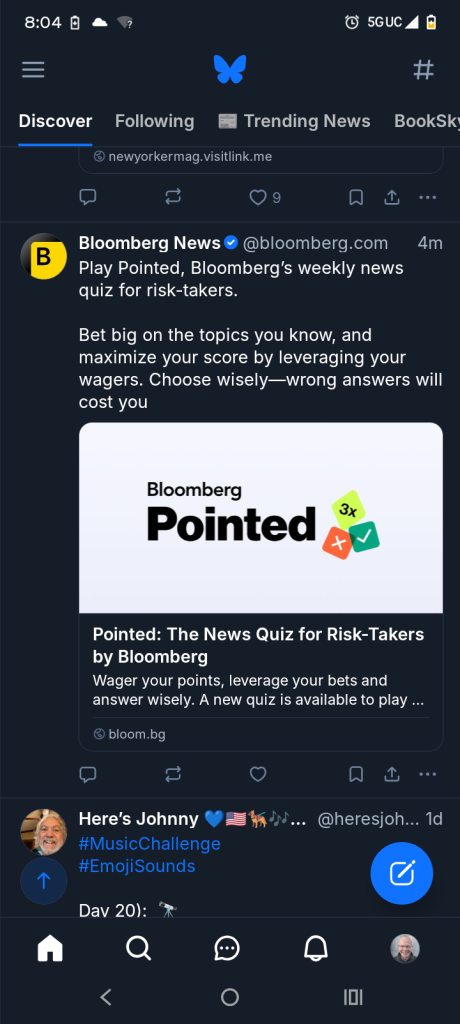
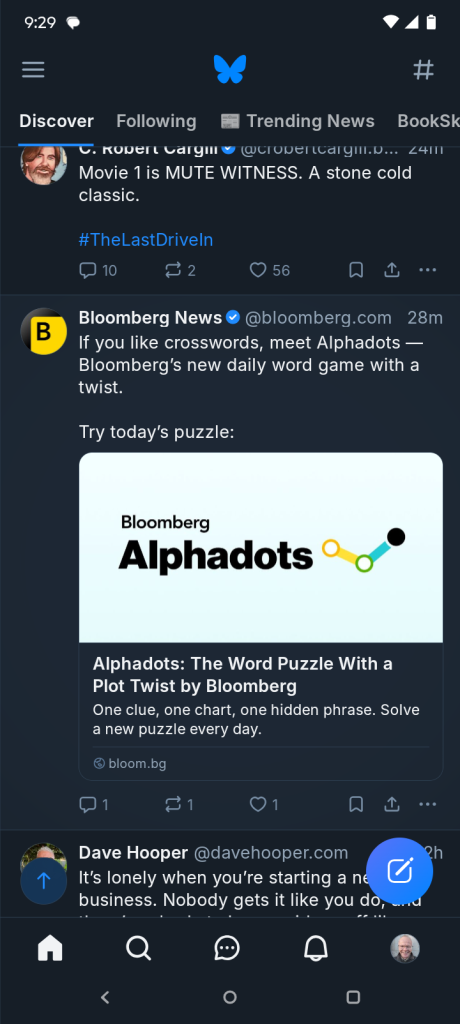
Bloomberg pimps its new puzzles too
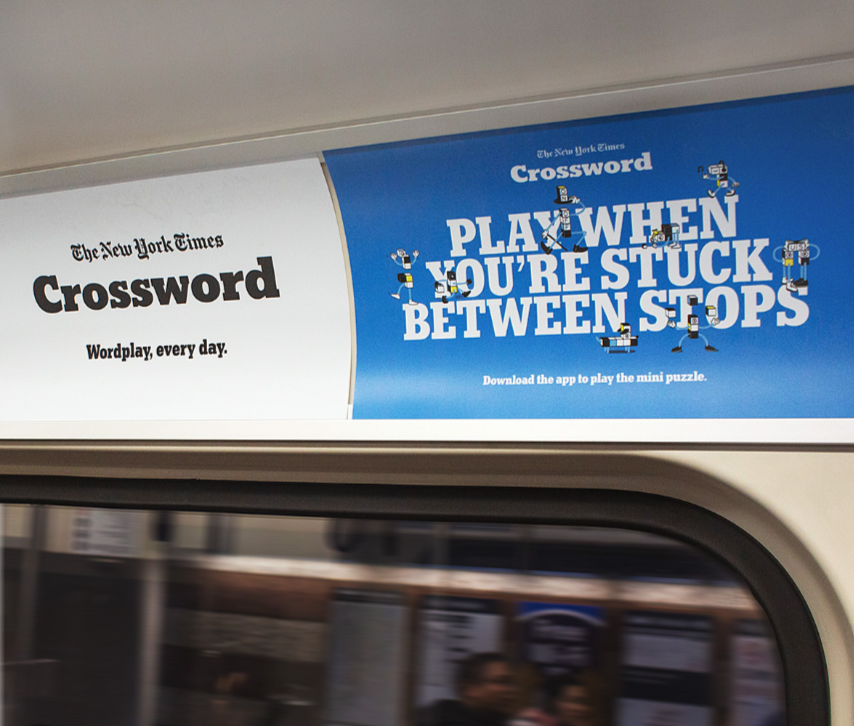
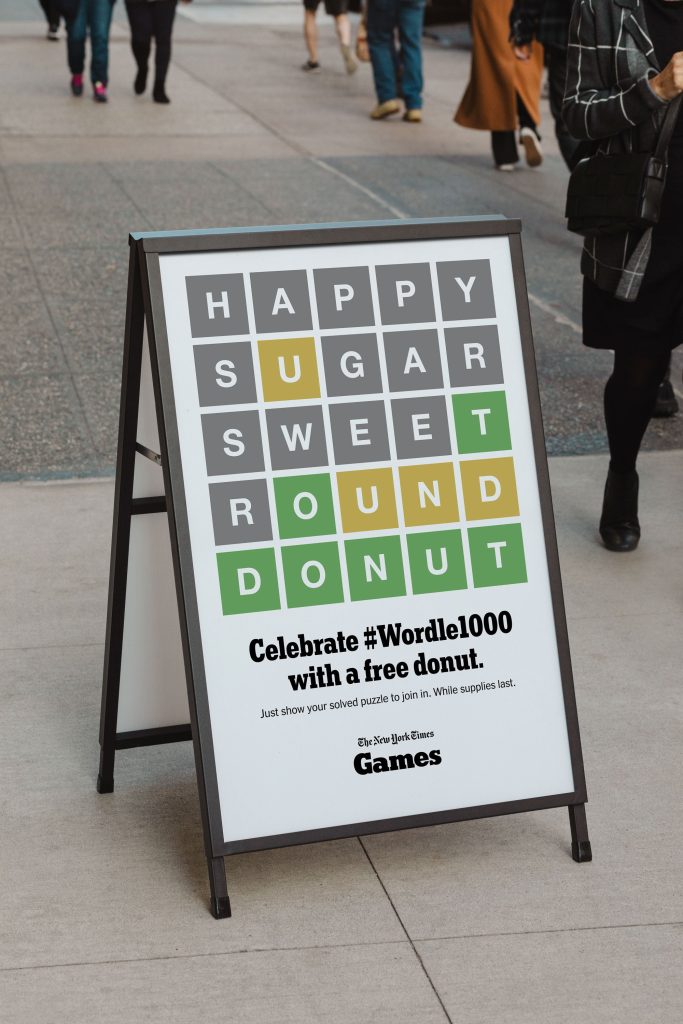
Some history of NYT ad campaigns promoting its games
NYTimes.com launched its first out-of-home marketing campaign campaign for its online crossword juggernaut back in 2019. At the time, the crossword has 400,000 subscribers… today that number has reportedly grown past 10 million.
In 2024, the paper launched a huge campaign that combined ads and experiences to celebrate the 1000th Wordle puzzle. The campaign included lighting up the Empire State Building in Wordle’s signature yellow and green to discounts on Uber and Spotify to giving away free donuts, bagels, and drinks at venues across the country.
After starting Blogads in 2002, I’ve had the privilege of talking with Rafat Ali periodically since the mid 2000s when he was working for Jason Calacanis.
I have cheered (and been cheered by) Rafat’s progress from solopreneur focused on travel news to a major player in the media ecosystem around the travel industry. Today Skift, Rafat’s company, supports nearly 100 people across 16 countries.
As 2025 ends, Rafat’s stepped back to reflect on Skift’s trajectory and reached a startling conclusion, a conclusion that’s about as big picture as it gets.
Every media company claims to provide insight. Most provide information wrapped in the language of insight. Skift’s actual contribution is epistemological: We’re teaching the travel industry new ways of knowing itself.
His post offers a synopsis of the many times Skift stepped back from the day-to-day news to do the hard work of defining and describing new axes that participants can use to graph and frame and position their businesses. Examples include concepts like “overtourism” (over-saturated tourist destinations) and “live tourism” (travel organized around live events.)
Framing his own business, Rafat sums up, “the company is an extended argument about what matters.”
I’m reminded a chapter in Sir Harold Evans’ autobiography, in which he chronicled how the Sunday Times wrote repeatedlyabout thalidomide over the course of weeks and months before any other UK publication covered the devastation the drug had wrought on children and families.
As one journalist who worked for Evans recalled, “He taught me how to campaign. He said, ‘You don’t just write it once. You don’t just write it twice. You go on writing until people are almost bored.’”
I’m also reminded of The Challenger Sale, a book about a strategic approach to selling “hard” products. The argument: don’t sell your product based on “cheaper” or “better,” since anyone can make those arguments. Position your product as solving a big problem (or opportunity) the customer (and your competition) isn’t even focusing on yet. Challenge them to see the world and their business in a new way.
In the same vein, Quizlab isn’t just powering quizzes, it’s embarked on a small epistemological mission: helping Substack publishers understand that a) quizzes can help readers notice new information or angles and b) after meeting the challenge of creating content that’s sufficiently interesting to attract readers, a publisher’s biggest enemy is churn.
I guess in a similar way, I see great Substackers (and newsletter writers and bloggers and, ok sure, all authors in general) as doing far more than providing information… they’re trying to change how their readers understand themselves, their peers, and the world.
And our quizzes help with that mission because each quiz creates a snapshot not only of an individual reader’s knowledge, but of how that knowledge compares to what the community knows or believes.
I’ll close with Rafat’s great framing of Skift: “the company is an extended argument about what matters.” All great ventures should have, in ways tiny or grand, the same mission in their DNA.
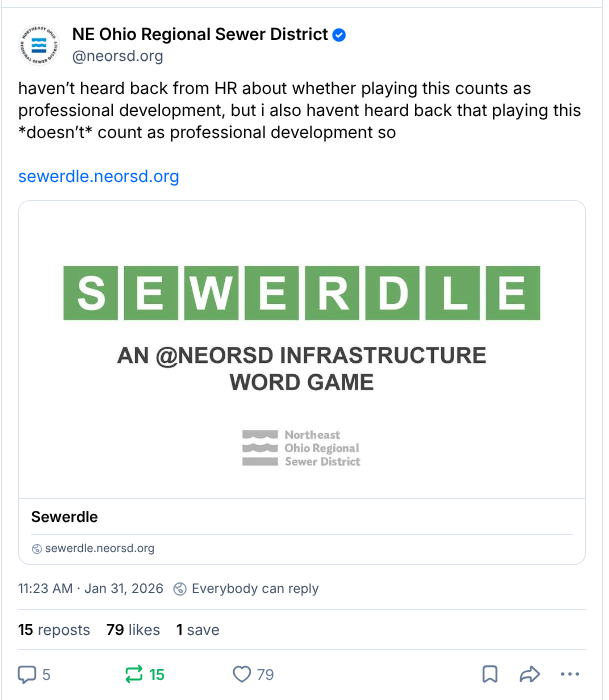
In case you haven’t noticed, Netflix just started pushing content-extending games relating to some of its biggest franchises, including Stranger Things, Squid Game, KPop Demon Hunters, Glass Onion: A Knives Out Mystery, and Emily in Paris.
Netflix promises a new Stranger Things puzzle “every day from Nov. 26 until the final episode of Season 5 is released on Dec. 31, you’ll play to unlock exclusive behind-the-scenes videos and more to get a closer look at Mind Flayers, Demogorgons, and maybe even Vecna himself.”
“This guide, produced by The American Journalism Project’s Product & AI Studio, will help local news outlets navigate AI tools for public meeting coverage, detailing what each tool does, how it’s used, who’s using it, and what makes it unique.”
In related news,try Pressflex’s new text-to-diary tool Wispr.ing. Your texts and photos become a daily diary entry that can be edited, backdated or shared.
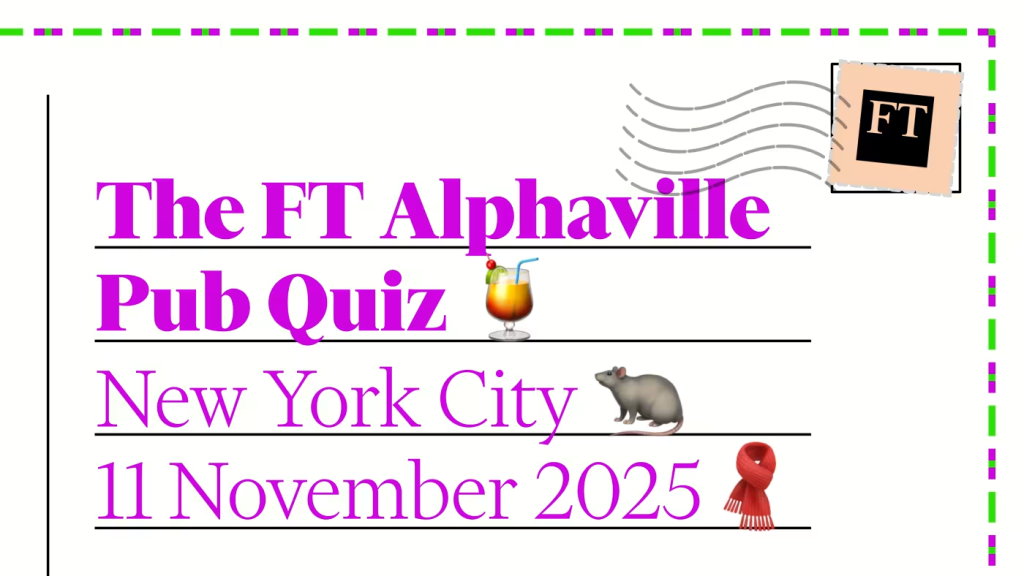
As the cult(ure) of news quizzes continues to grow, the FT just announced that it’s reviving its live pub quiz in NYC. “This is your chance to prove you’re the biggest finance nerd this side of the Atlantic and/or exercise your humiliation kink in public.”
The contents will be broad and wide: “Seven rounds of finance-themed questions in a classic pub quiz format, covering everything from stocks to shocks, CEOs to CLOs and much more besides.”
Chris Cillizza, Youtuber and Substack scribe, just penned a good essay about the grit and determination required of independent creators.
“The idea that independent journalism is an immediate financial windfall is deeply misguided,” writes Cillizza.
Cillizza, formerly of Wapo and MSNBC, started with the misconception among mainstream journalists that the grass (and cash) are greener on the other side of the fence:
The assumption by mainstream media types is that going independent means you just start bathing in gold doubloons. Or just head out to the backyard to pick cash off the money tree planted in your backyard. Pick your money-making metaphor.
You get the idea. When mainstream media reporters think of the world of independent journalism, they tend to think they are going to get rich. And quick.
Journalists extrapolate from the fire hose of attention their work gets when published on a big site and assume they’ll wrack up similar page views.
When you come from a massive media brand where your articles or videos are getting tens or even hundreds of thousands of views consistently, it seems like the math should be pretty easy.
Just get 5,000 people to pay $5 a month for a Substack and you are at $250,000. Easy peasy lemon squeezy!
Except, well, not.
It turns out that with the fire hose of MSM turned off, an independent journalist needs to create hundreds of individual relationships with readers… and that’s a LOT of work and time.
For Cillizza, the key is grit and determination and persistence. Just keep grinding out the content. “Building up a library of content that people who wander into your site can browse to get a sense of you and eventually — we hope — subscribe,” says Cillizza.
For more context, here’s Simon Owen’s wrap-up of Cillizza’s journey arcing through Roll Call, Wapo, MSNBC and finally CNN, from which he was abruptly laid off in late 2022.
Quizzes aren’t just about events, news, facts, etc.
Quizzes can themselves become events, creating nuggets of information that can be examined, consumed, discussed, and even parodied.
Sometimes, quizzes are the best revenge for a ridiculous news cycle. Some examples from last week…
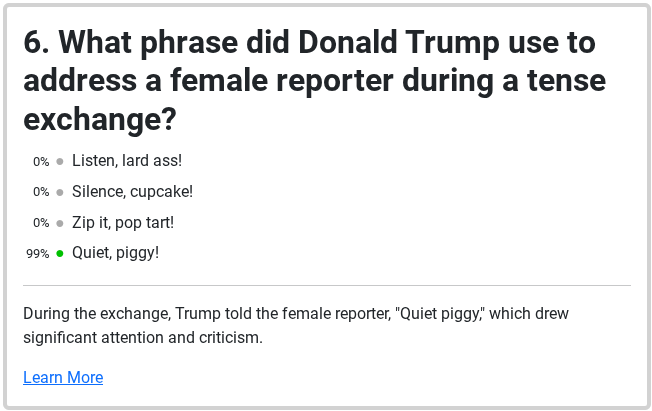
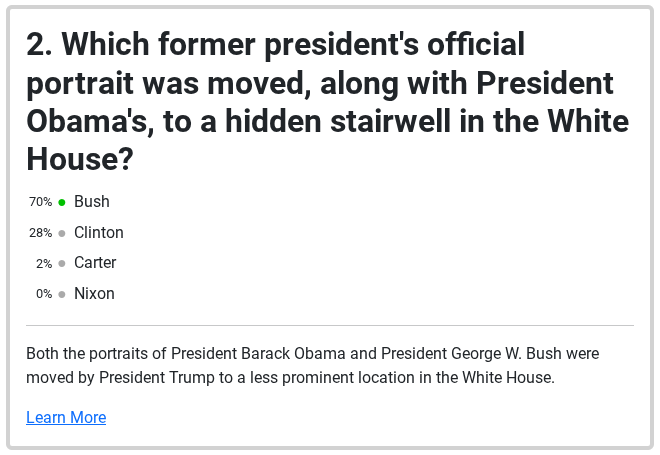
(1) The answer to Political Wire‘s question about Trump’s shuffling of Presidential portraits was telling as a sign of Trump’s relentless pettiness. A fact that would otherwise be buried in a news story is held up in the harsh light of multiple choices for consideration on its own. Which answer is the most absurd and therefore probably true, one wonders?
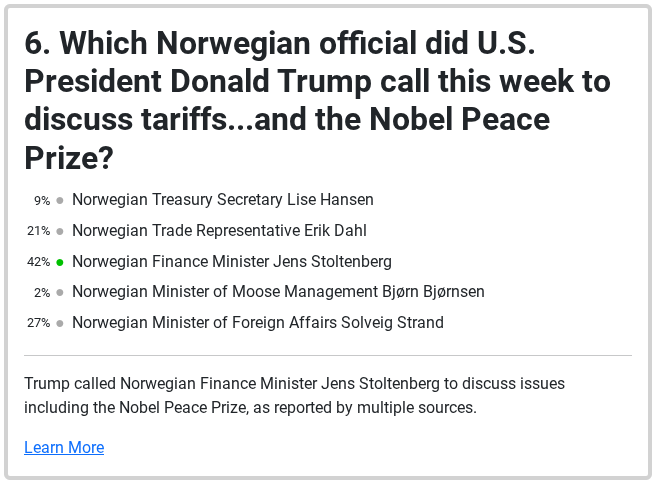
(2) Is there any better way to crisply snapshot the absurdity of Donald Trump’s unrelenting quest to “win” a Nobel Peace Prize than via Chris Cillizza‘s quiz question featuring the mooted answer “Minister of Moose Management”?
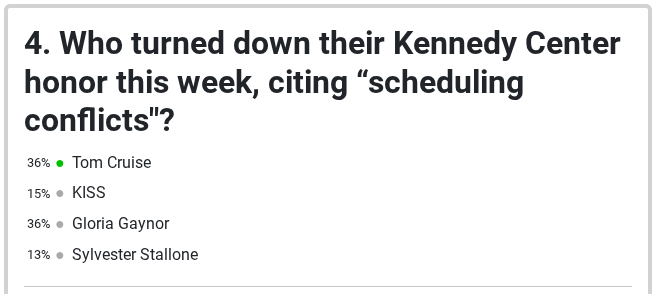
Although the answers to Jessica Yellin’s News Not Noise question about the Kennedy Center were all relevant, they were seasoned with enough absurdity to not need an extra slice of Moose Management.
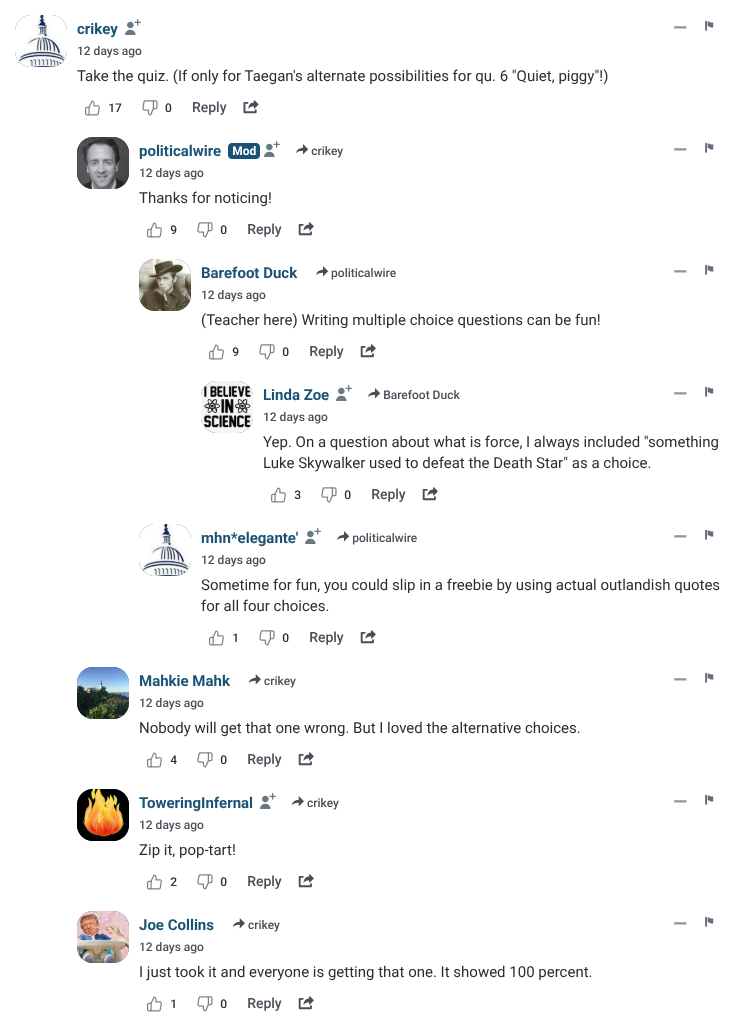
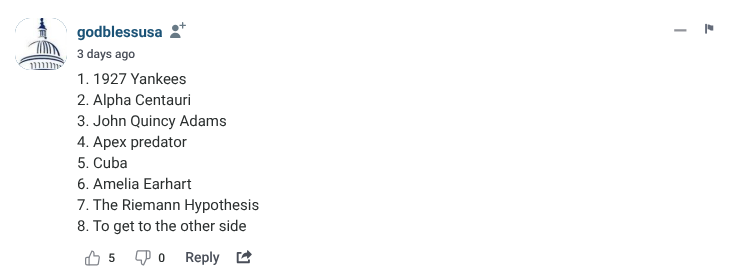
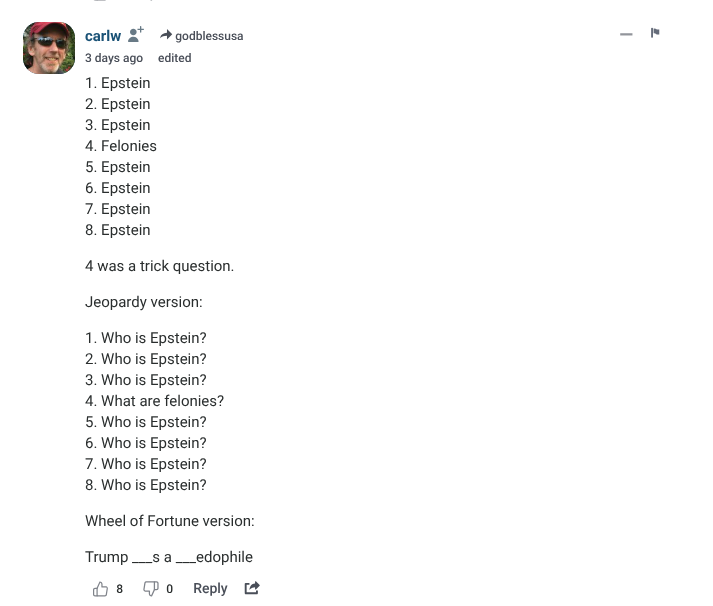
(3) Political Wire readers regularly propose alternative questions and answers to sum up recent events. One reader last proposed this set of correct answers to quiz questions.
To which another reader astutely proposed an even better set…
(4) Finally, some readers are enjoying quizzes so much they’re demanding more!
What’s the difference between a thriving subscription business and one that’s flailing?
In one word: unsubscribes.
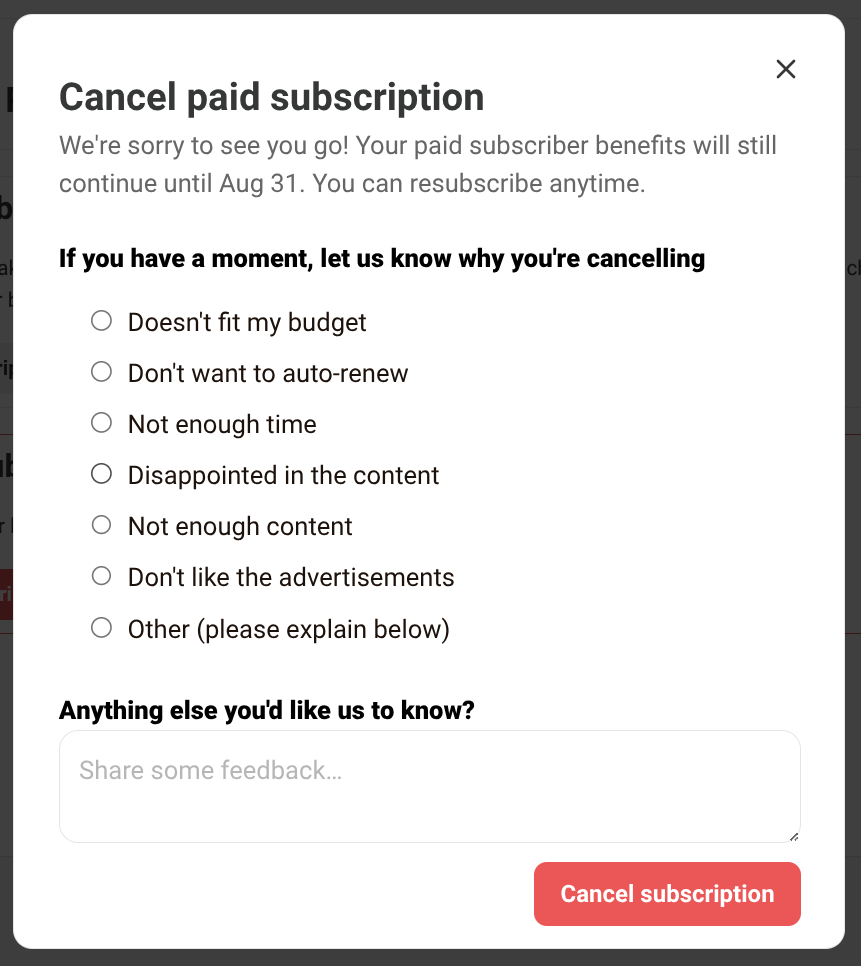
Substack’s unsubscribe popup window sums up reasons people cancel their newsletter subscriptions. “Not enough time” is a popular choice.
TLDR
Based on the subscription-value calculator we built recently , when you compare a newsletter with a 1.5% churn versus a 12% churn, the lifetime value of a subscriber for the average Substack publisher is a whopping $467 vs $58.
That’s the math. More subjectively, over time, unsubscribing readers (aka churn) are the undertow that becomes, when it becomes too big, a riptide that sucks a creator’s business under.
Below, we explore the formulas and mechanics that determine a newsletter’s long-term viability. We’ll describe why quizzes are a cost-effective strategy for countering churn. And we’ll link to the new churn calculator so you can experiment with the math in this email using your newsletter’s own specifics.
Net gain
We’ll start with some hypothetical newsletter math. Let’s say you’ve got 1,000 subscribers and are gaining 20 subscribers a month.
That sounds great. All else being equal, five years from now your revenues will rise from $84,000/year to $192,000. Nice job!
Or, as our president would say, NICE JOB!
Beneath the hood
It’s easy to focus on net subscribers gained per month, particularly in the early months of publishing when lots of new people are showing up.
The reality, though, is that subscribers come and go.
Sure, it’s possible your original 1000 subscribers are loyal AF and will never unsubscribe. But a (much) more likely scenario than what’s above is that you’re gaining 50 subscribers /month, while also losing 3% of current subscribers each month!
Initially, that means you lose 30 subscribers/month (hence the 20 subscription net gain). But as your subscribers slowly grow, the losses mount. MBAs call this “churn.” When you factor in 3% churn month after month to our original scenario, your newsletter’s year 5 revenues will be $106,481.
The bad news
Now let’s say your new subscription uptake stays steady at 50/month, but after an initial exciting gusher on launch, monthly churn rises to 6%. (Objective data is scarce, but 6% churn sits in the middle of what Claude cites as the range for B2C newsletter churn.)
Maybe many subscribers joined because of a single press hit, but aren’t interested in your core product. Or you’re publishing too much and getting ignored. Or you’ve got new competition for eyeballs and attentional minutes.
In year 5, your revenues are just $70,523. You’re still gaining 50 new subscribers/month, but you’re losing more. Over time, churn is the undertow that will become, if it gets too big, a riptide that sucks your business under.
The good news
But wait! What if you can cut churn to 2%/month, while still winning new 50 subscribers a month thanks to organic sharing and occasional press hits?
Maybe churn drops because you’re regularly publishing exactly what your readers need — your voice is scintillating, your sources are unique, your commentariat is vibing, you’ve added a new subscriber-only chat, you’re giving subscriber-only discounts on trendy branded swag, you’ve picked fights with the right idiots. And, yes, you’re publishing weekly quizzes that keep 10% of your readers amused, educated, sharing and/or addicted.
With 2%/month churn, year 5 revenues will be $167,143… 57% more revenue than if churn is 3%… and 2.4 times more than if churn is 6%.
The value of a subscriber: $467 or $58?
Let’s come at churn atomically, diving down to the level of a single typical individual subscriber.
It’s easy to think of each new subscriber as a $7 win. In fact, a new $7/month subscription might be worth as much as $467, thanks to 1.5% churn and an average lifetime of 5.5 years as a subscriber.
Or that subscriber could be worth just $58, if monthly churn is 12% and the average subscriber sticks around just eight months.
(Reduce churn to 0.5%/month and the average subscriber sticks around 17 years and pays you $1,400… A REALLY NICE JOB!)
Turning content into connections
What’s all this mean for your strategy as a publisher?
Of course it’s tempting to create more content… more exclusive interviews. More hot takes.
And obviously, letting your readers network with each other through comments can make a big difference. Podcasts help deepen the brand connection. Subscriber-only chats are important too.
But all those strategies require ongoing work, and just 1-10% of subscribers will be consistently moved by a particular strategy.
Investing in quizzes
Quizzes are an essential addition to this bundle, because after an author’s initial investment in creating a quiz, subscribers do all the work… happily! (The New York Times didn’t hire 100 game developers just for giggles—they understand that engagement tools like quizzes are churn-killers.)
A quiz provides a uniquely cost-effective opportunity to recycle the work you’ve done during the week, the content you’ve created, the editorial choices you’ve made, the telling details and odd phrases you’ve spotted. It’s an opportunity for a reader to compare herself to peers in each question’s answer-skew and in each post-quiz results histogram.
The quiz broadens your relationship with readers — and their relationships with each other — across multiple psychological levers: ego (pursuing a perfect score), amusement (making good guesses), and loss aversion (maintaining a streak). 100% velcro for your newsletter!
A quiz gives readers a chance to enjoy, to compete and most importantly, invest more time and energy in your brand. If 100 quiz takers each spend an average of 3 minutes on a single quiz, that’s five hours of reader benefit generated by something that took you 20 minutes to create. And that’s five hours readers have not invested in their relationships with NYTimes.com or CNN or Vox or Heather Cox Richardson.
Back to the bucks
That’s all subjective.
To return to the almighty dollar, the original premise of this email, every $7/month subscriber that a newsletter wins or keeps has a potential $467 payoff if properly nurtured. And every lost subscription is at least $467 that just walked away.
If a quiz taken by 100 readers helps just 10 subscribers stick around six months longer, that’s $420 of value. If 10% of 1,000 quiz takers become more invested in your brand, that’s $4,200. For 20 minutes of work on a quiz that deepens engagement for highly motivated subscribers, that’s an unbeatable ROI and an unrivaled investment in your newsletter’s long term viability.
Here’s the new calculator that illustrates churn’s impact on your long-term revenues. Just change churn or other variables and hit enter. BTW, if you’d like us to analyze your newsletter’s churn using raw data, drop us a line.